Introduction to Purview's Data Governance Framework
What is Microsoft Purview?
Microsoft Purview represents Microsoft's comprehensive data governance platform, designed to help organisations discover, classify, and protect sensitive data across their entire digital estate. It unifies data catalogue, data classification, and data protection capabilities into a single, integrated solution.
The Foundation of Modern Data Governance
Purview addresses critical governance challenges by providing visibility into data location, sensitivity, and usage patterns. The platform enables organisations to implement consistent policies, maintain compliance with regulatory requirements, and establish trust in their data assets through automated discovery and intelligent classification mechanisms.
- Unified data visibility across hybrid and multi-cloud environments
- Automated classification and labelling of sensitive information
- Comprehensive compliance reporting and risk assessment
- Integration with existing Microsoft 365 security tools
Core Data Classification Terms
Microsoft Purview's classification capabilities form the foundation of its data protection strategy. Understanding these core concepts is essential for implementing effective governance policies and ensuring sensitive data receives appropriate protection throughout its lifecycle.
Sensitivity Labels
Persistent classification markers applied to documents, emails, and files that define protection policies. These labels travel with the content, enforcing encryption, access restrictions, and visual markings. Examples include "Confidential", "Highly Confidential", and "Public".
Use: Applied manually by users or automatically based on content detection rules to ensure consistent protection.
Information Types
Pre-defined or custom patterns that identify specific categories of sensitive data, such as credit card numbers, national insurance numbers, or medical records. These types use pattern matching, checksums, and proximity rules to detect sensitive information accurately.
Use: Configure automatic labelling policies and data loss prevention rules based on detected information types.
Trainable Classifiers
Machine learning models that identify content based on semantic meaning rather than simple pattern matching. These classifiers learn from examples to recognise documents like contracts, source code, or financial statements, even without specific keywords.
Use: Deploy for complex classification scenarios where traditional pattern matching proves insufficient.
Data Asset Management: Essential Terminology
Effective data governance requires comprehensive understanding of your organisation's data landscape. Purview's asset management capabilities provide the tools to catalogue, track, and understand data across your entire estate.
Data Catalogue
A searchable inventory of all data assets within your organisation, enriched with metadata, classifications, and business context. The catalogue enables data discovery through business glossaries and facilitates collaboration between technical and business users.
Industry Mapping: Aligns with DAMA-DMBOK metadata management and ISO 8000 data quality principles.
Data Lineage
Visual representation of data movement and transformation across systems, showing source origins, processing steps, and consumption points. Lineage tracking helps identify impact of changes, troubleshoot data quality issues, and demonstrate compliance.
Industry Mapping: Supports GDPR Article 30 record-keeping and SOX compliance requirements for data traceability.
Data Estate
The complete collection of data assets under management, spanning on-premises databases, cloud storage, SaaS applications, and file shares. Understanding your data estate scope is crucial for comprehensive governance coverage.
Industry Mapping: Corresponds to NIST Cybersecurity Framework's "Identify" function for asset management.
Access Control Terminology: Securing Your Data
Robust access control mechanisms ensure that only authorized users can access sensitive data under appropriate conditions. Purview's access control framework combines identity, policy, and contextual factors to enforce least-privilege access principles.
Data Policies
Declarative rules that govern how data assets can be accessed, shared, and used. Policies define permissions at various levels—from entire data sources down to individual columns—enabling fine-grained control. They integrate with Azure Active Directory and support delegation to data owners.
Use: Implement least-privilege access and enable self-service data access with governance guardrails.
Mapping: ISO 27001 A.9.4 (System and Application Access Control), NIST AC-3 (Access Enforcement).
Role-Based Access Control (RBAC)
Authorization approach that assigns permissions based on user roles rather than individual identities. Purview defines roles like Data Reader, Data Curator, and Data Source Administrator, each with specific capabilities aligned to job functions and responsibilities.
Use: Simplify permission management and ensure consistent access control across your data estate.
Mapping: NIST RBAC model, GDPR principle of data minimization in access permissions.
Conditional Access
Dynamic access policies that evaluate contextual factors—such as user location, device compliance state, and risk level—before granting access to sensitive data. These policies enable adaptive security that responds to changing threat conditions.
Use: Enforce stricter controls for high-risk scenarios whilst enabling productivity for trusted contexts.
Mapping: NIST Zero Trust Architecture principles, ISO 27001 A.9.1.2 (Access to networks and services).
Compliance and Risk Management Terms
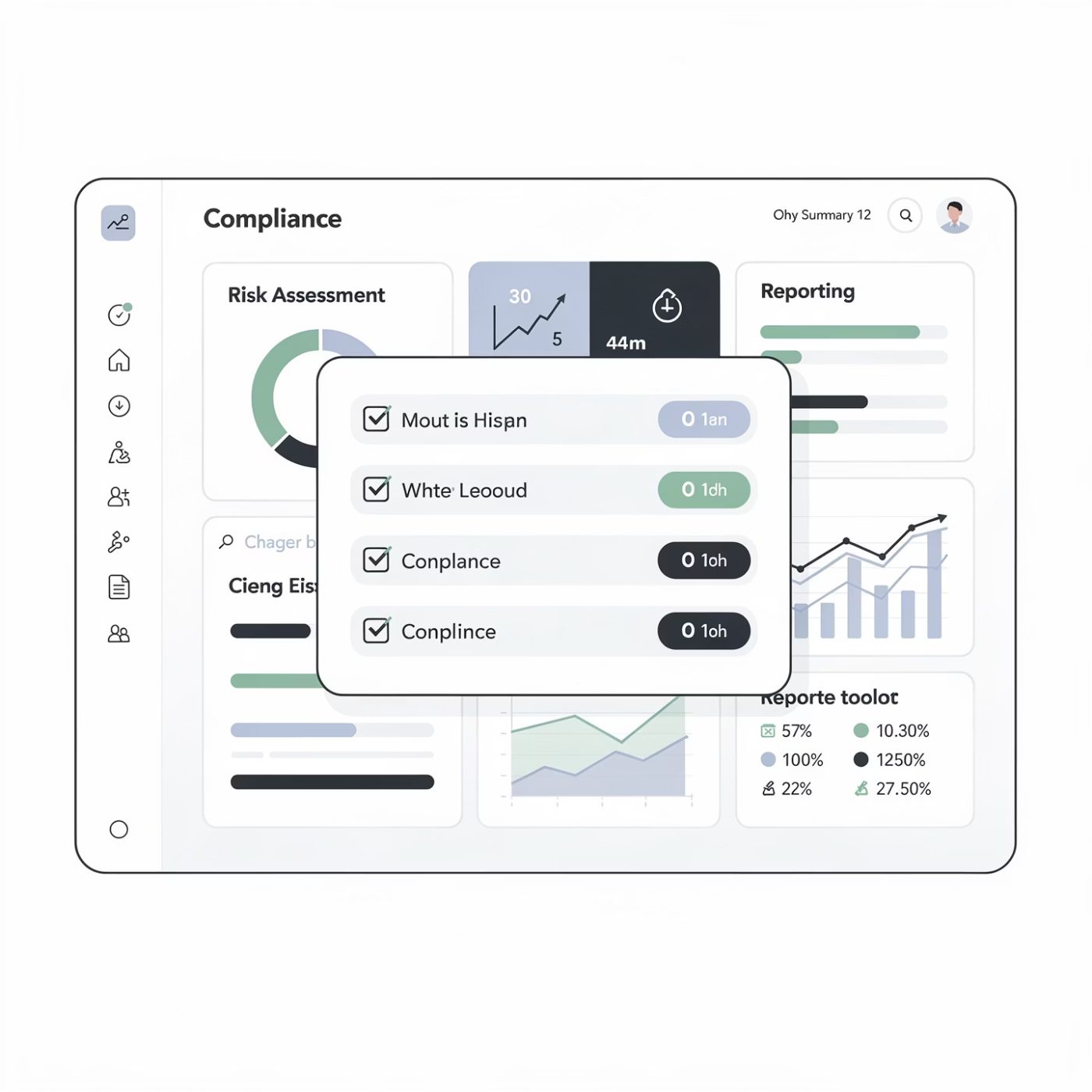
Maintaining regulatory compliance and managing data-related risks requires continuous monitoring, policy enforcement, and evidence collection. Purview provides comprehensive tools to measure compliance posture and prevent data loss incidents.
Compliance Score
Quantitative measure of your organisation's compliance posture based on implemented controls and risk assessments. Provides actionable recommendations for improvement aligned with regulatory frameworks.
Data Loss Prevention (DLP)
Protective measures that detect and block unauthorized sharing of sensitive information. DLP policies monitor content in emails, documents, and applications, preventing accidental or malicious data exfiltration.
Retention Policies
Rules that govern how long data must be kept and when it should be deleted. Ensures compliance with legal hold requirements whilst reducing storage costs and privacy risks from outdated data.
Discovery and Scanning: Mapping Your Data Landscape
Before you can govern data, you must know where it resides and what it contains. Purview's discovery capabilities automatically scan and catalogue data across diverse sources, creating a comprehensive map of your data estate.
Data Sources
Systems and repositories that store data, including Azure services, on-premises databases, SaaS applications, and file shares. Purview supports 200+ data source types through native connectors and extensible scanning frameworks.
Scan Rules
Configuration templates that define what should be scanned, how often, and which classification rules to apply. Scan rules balance comprehensive discovery with performance impact and cost considerations.
Collection Hierarchies
Organizational structure within the catalogue that groups related data sources, reflecting business domains or geographical boundaries. Collections enable delegated management and scoped access control.
Industry Alignment: These discovery capabilities support ISO 27001 requirements for information asset inventory (A.8.1) and GDPR mandates for maintaining records of processing activities (Article 30). The automated scanning approach aligns with NIST guidelines for continuous asset monitoring.
Industry Standard Mappings: Bridging Purview to Global Frameworks
Understanding how Purview terminology aligns with established compliance frameworks is essential for regulatory reporting and audit preparation. This mapping demonstrates how Purview capabilities satisfy requirements across major international standards.
GDPR Alignment
- Sensitivity Labels → Art. 32 (Security measures)
- Data Catalogue → Art. 30 (Records of processing)
- DLP Policies → Art. 5 (Data protection principles)
- Retention Policies → Art. 17 (Right to erasure)
ISO 27001 Mapping
- RBAC → A.9.2 (User access management)
- Information Types → A.8.2 (Information classification)
- Scan Rules → A.8.1 (Responsibility for assets)
- Data Policies → A.9.4 (Access control)
NIST Framework Correlation
- Data Estate → ID.AM (Asset Management)
- Trainable Classifiers → ID.RA (Risk Assessment)
- Conditional Access → PR.AC (Identity Management)
- Compliance Score → ID.GV (Governance)
- Data Lineage → DE.AE (Anomalies & Events)
These mappings enable organisations to leverage Purview capabilities whilst demonstrating compliance with multiple frameworks simultaneously, reducing audit burden and ensuring consistent governance approaches.
Governance Workflow Terms: Operationalising Data Protection
Effective data governance extends beyond technology to encompass people, processes, and accountability structures. These workflow terms define how governance operates day-to-day within your organisation.
Data Stewardship
Designated ownership and accountability for specific data domains. Data stewards ensure quality, resolve access requests, and maintain business glossaries. They bridge technical implementation and business requirements, serving as subject matter experts.
Mapping: DAMA-DMBOK Data Stewardship principles, ISO 8000 data quality roles.
Approval Processes
Formal workflows requiring authorization before sensitive actions occur, such as granting access to confidential data or modifying classification policies. Approval chains ensure appropriate oversight and create audit trails for compliance.
Mapping: SOX segregation of duties requirements, ISO 27001 A.9.2.1 user registration.
Policy Enforcement
Automated mechanisms that prevent policy violations in real-time, such as blocking emails containing sensitive data or denying access to restricted resources. Enforcement ensures governance rules translate into tangible protection rather than recommendations.
Mapping: NIST PR.PT-3 (least functionality), GDPR Art. 25 (data protection by design).
Implementation Roadmap: Key Terms for Success
Successfully deploying Microsoft Purview requires understanding implementation terminology and following a structured approach. These concepts guide organisations from initial setup through mature governance operations.
Governance Scope Definition
Identifying which data sources, sensitivity types, and business units fall under initial governance coverage. Start with high-risk data and expand systematically to avoid overwhelming resources.
Stakeholder Alignment
Engaging data owners, security teams, compliance officers, and business leaders to establish shared governance objectives, accountability structures, and success metrics that drive adoption.
Technical Configuration
Setting up scanning infrastructure, defining classification taxonomies, configuring policies, and integrating with existing security tools. Technical excellence ensures governance scales effectively.
Continuous Improvement
Monitoring governance metrics, refining policies based on user feedback, expanding coverage to new data sources, and adapting to evolving regulatory requirements. Maturity comes through iteration.
"Successful Purview implementations combine technical capabilities with organisational change management, ensuring that governance becomes embedded in daily operations rather than an isolated compliance exercise."
"Successful Purview implementations combine technical capabilities with organisational change management, ensuring that governance becomes embedded in daily operations rather than an isolated compliance exercise."